
Raised septic bed or conventional bed: what your lot in Ontario allows
If you've been told your new septic bed has to be raised, the reason is usually what sits under your lawn. Ontario's Building Code sets a test a lot has to pass before a bed can go into the ground. Here is the test, what each fix looks like in your yard, and how the choice gets made for your property.
What an in-ground bed needs from your soil
A conventional septic system is a Class 4 system in the Building Code: a septic tank that sends liquid out to a leaching bed. The bed is a set of trenches, 600 to 900 mm deep and up to 30 metres long, with perforated pipe laid in stone. The liquid soaks from the trenches into the soil around them.
For that to be allowed in the ground you already have, the Code sets three conditions:
- Enough soil above the rock and the water. The bottom of every trench sits at least 900 mm above the high groundwater table, bedrock or very tight soil. Add the trench depth and that means roughly 1.5 metres or more of suitable soil.
- Soil that drains at the right speed. Soil is rated by percolation time, the minutes it takes water to soak in. An in-ground bed needs a time between 1 and 50 minutes. Soil that drains faster or slower than that doesn't qualify.
- Ground that isn't too steep. The bed area can't average steeper than 1 unit up for every 4 across.
The bed also keeps its distance: 15 metres from a lake, river or stream, 5 metres from the house and 3 metres from a property line.
Why some Kawartha lots fail that test
Kawartha Lakes sits where two kinds of ground meet. Kawartha Conservation's report on the Pigeon Lake watershed describes the northern subwatersheds as Canadian Shield, "characterized by areas of exposed granite or limestone bedrock and shallow soils," and the southern ones as "deep soils over limestone bedrock." The same report notes that on and next to the Shield, soils are often too thin to farm.
So two lots a short drive apart can get very different designs. Where the rock is close to the surface, the bed moves up into imported fill. Where the lot is tight between the house, the well and the lake, the design moves toward a filter bed or a treatment unit.
How a raised bed works
A raised bed is built on top of the original ground using imported sand or soil the Code calls leaching bed fill. The trenches and pipes go into the fill instead of the native soil.
The Code sets the rules for the fill:
- At least 250 mm of unsaturated soil or fill has to sit under the whole bed and continue for at least 15 metres past the outer pipes, in whichever direction the liquid will travel sideways.
- The site is cleared of vegetation first, the fill goes down in compacted layers, and the pipes go in only after the compacting is done.
- The sides slope no steeper than 1 unit up for every 4 across, or 1 in 3 with erosion control.
- The setbacks grow by twice the height of the bed above the original grade.
In your yard, a bed raised one metre has sides that run out at least 4 metres on every edge, and it has to sit 17 metres from the lake instead of 15. That is why a raised bed takes more room than people expect. Our guide to what a septic bed replacement costs in Ontario covers how the type of bed moves the price.
Filter beds: a sand filter under the pipes
A filter bed spreads the liquid over a layer of specified clean sand at least 750 mm deep, graded to the Code's particle sizes. The bottom of the stone layer still sits at least 900 mm above groundwater or rock, so on a shallow lot the filter bed is raised as well, under the same fill rules.
A few Code limits shape it:
- Each filter bed has 10 to 50 square metres of sand surface.
- For houses up to 3,000 litres a day, the sand takes no more than 75 litres per square metre a day. A three-bedroom house, designed for 1,600 litres a day, works out to a little over 21 square metres of filter surface.
- Paired with an ordinary septic tank, a filter bed serves a daily design flow of up to 5,000 litres.
Tertiary units for the tightest lots
A tertiary system adds a treatment unit, such as a Waterloo Biofilter or an Ecoflo, between the house and the bed. The unit cleans the liquid before it reaches the ground. The Code rates these units in levels by what comes out, down to 10 mg per litre of suspended solids and 10 mg per litre of CBOD5, a measure of organic load, at Level IV, its cleanest.
Cleaner effluent qualifies for a smaller bed. With a Level II, III or IV unit, an in-ground bed needs a third less pipe, and a filter bed can take 100 litres per square metre a day instead of 75. A Level IV unit also opens up the Type A dispersal bed, a sand-and-stone bed the Code allows only for effluent treated to that level. On a small waterfront lot, that can be what makes a design fit.
A treatment unit with mechanical parts carries an alarm you can see and hear, and the Code requires a service agreement with someone the manufacturer authorizes to maintain the unit.
Who decides which one you get
The Code requires a site evaluation on every lot where a new or replacement system goes in. Percolation tests are dug in at least three spots and the slowest result is used, or the soil is classified by type. The designer, who in the City of Kawartha Lakes has to hold a BCIN registration or be a Professional Engineer, puts the soil results, the depth to rock or water, the house's bedrooms and the setbacks together into a design. The City's Septic Inspector reviews it before issuing the permit.
What it means for your yard
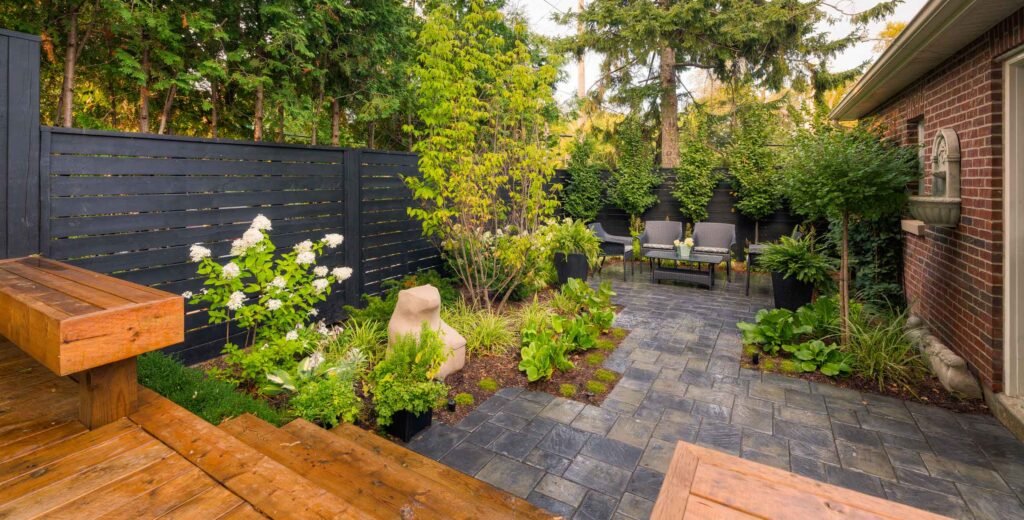
A raised bed or raised filter bed is a long, low mound with gentle sides, so plan the driveway, the view and any future garden around it. The Code bars covering a bed with anything water can't pass through, which rules out pavement or plastic sheeting, and it wants the surface shaped to shed rain and protected from erosion. Grass is the usual finish.
Thor Construction also does landscaping, so the yard around a new bed can be planned with the bed itself. See our landscaping services.
Find out what your lot allows
Thor Construction is a certified septic installer. We install and replace conventional beds, raised and filter beds and tertiary systems across Kawartha Lakes and the townships around it. Call (705) 208-7121 or send the short form on our septic installation and replacement page. An owner calls you back the same day, walks the lot with you, and you get a free written quote after the visit.
Raised septic bed FAQ
Why does my septic bed have to be raised? Usually because there is less than about 1.5 metres of suitable soil above rock or the water table, or the native soil drains too fast or too slowly for an in-ground bed.
Is a raised septic bed the same as a mound? In everyday terms, yes. In the Building Code it is a leaching bed built in imported fill.
Can a small waterfront lot take a septic system? It can, often with a treatment unit and a smaller bed, as long as the setbacks to the lake, the well and the lot lines can be met. A site visit tells you which design fits.
Sources
- Ontario Building Code, Part 8 Sewage Systems (2024 Building Code Compendium): Class 4 definition (8.1.2.1), site evaluation and percolation tests (8.2.1.2), daily design flows (Table 8.2.1.3.-A), clearances (Tables 8.2.1.6.-A and -B), treatment unit levels and alarms (8.6.2.2, Table 8.6.2.2.), soil, slope and cover limits (8.7.2.1), pipe length with treated effluent (8.7.3.1), trench size and 900 mm separation (8.7.3.3), leaching bed fill rules (8.7.4.2), filter beds (8.7.5.1 to 8.7.5.3), Type A dispersal beds (8.7.7.1), service agreements (8.9.2.3)
- Kawartha Conservation, Pigeon Lake Watershed Characterization Report 2018: Canadian Shield and limestone soils (Physical Characteristics; section 4.4 Soils)
- City of Kawartha Lakes, Residential Sewage System Permit guide (Sept 2026): BCIN or Professional Engineer for the design
- City of Kawartha Lakes, Septic Permits: Septic Inspector review and inspections
Need this done on your property?
Septic bed done, a house sale waiting on it, or a bedroom to add? New systems and full replacements, with the design, permit and inspections handled.